
Table of Contents
Walk into any home goods store and you’ll find shelves of cushions in various sizes, colors, and price points. Order online and the options multiply exponentially. It’s tempting to grab something that looks close enough and call it done. But here’s the question most people don’t ask until it’s too late: will that cushion still be comfortable and functional two years from now? Five years? Or will you be back shopping for replacements before you’ve even gotten used to having them? The answer depends less on luck and more on understanding fundamental differences between mass-produced store cushions and professionally crafted custom options – differences that become starkly apparent over time.

The Durability Question Nobody Asks Upfront
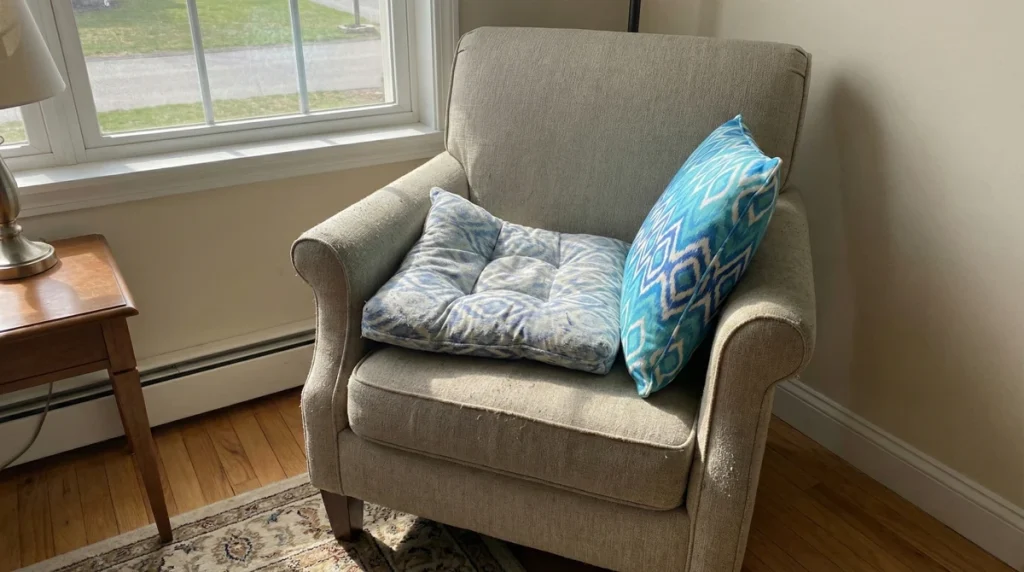
When shopping for cushions, most people focus on immediate factors: Does it match my decor? Is the price reasonable? Will it arrive before the weekend? These questions matter, but they miss the critical long-term consideration: how long will this actually last?
Durability isn’t sexy. It doesn’t photograph well. You can’t assess it in-store or from product images online. But it’s the single most important factor determining whether your cushion purchase represents good value or wasteful spending.
What “Durability” Actually Means for Cushions
Cushion durability encompasses several distinct but related qualities:
- Shape retention: Does the cushion maintain its original form, or does it develop permanent indentations and sags?
- Support consistency: Does the foam continue providing adequate support, or does it compress into a thin layer?
- Fabric integrity: Does the covering material resist fading, pilling, and wear, or does it deteriorate visibly?
- Construction resilience: Do seams, piping, and zippers hold up to regular use, or do they fail prematurely?
A cushion might excel in one area while failing in others. The cheap cushion with decent fabric but terrible foam. The well-constructed cushion with poor fabric choice. True durability requires all components working together over extended periods.
Industry reality: According to furniture manufacturing data compiled by Furniture Today industry reports, the average store-bought cushion begins showing noticeable quality degradation within 18-24 months of regular use. Custom cushions using professional-grade materials and construction typically maintain satisfactory performance for 5-7 years. That’s not a marginal difference – it’s a 3-4x advantage in functional lifespan.

VS
Store-Bought Cushions: The Reality Behind the Price Tag
Mass-produced cushions exist in a competitive marketplace where price is often the primary differentiator. This creates specific cost pressures that affect quality in predictable ways.
The Foam Compromise
Foam represents a significant portion of cushion manufacturing cost. For mass producers, reducing foam quality – using lower-density options, thinner layers, cheaper compounds – directly improves profit margins while being invisible to shoppers evaluating products in stores or online.
Standard store-bought cushions typically use foam in the 1.2-1.5 pounds per cubic foot density range. This feels adequate initially. The problem emerges months later when that foam begins permanent compression. What started as comfortable support becomes insufficient cushioning, leaving you essentially sitting on furniture frames with fabric between.
The cheapest component in a cushion initially becomes the most expensive component over time when it fails prematurely and requires complete replacement.
Construction Speed Over Longevity
In manufacturing environments prioritizing production speed, certain quality measures become casualties. Double-stitching takes longer than single-stitching. Reinforced corners require additional steps. Quality piping costs more and demands more careful installation.
These aren’t theoretical concerns – they’re the difference between seams that hold for years and ones that split within months. Between piping that maintains cushion structure and piping that separates, leaving fabric edges exposed and vulnerable.
Hidden cost of “savings”: A $60 cushion that needs replacing every 18 months costs $240 over six years, plus the time and hassle of repeated shopping and installation. A $200 custom cushion lasting seven years costs… $200. The “expensive” option is actually dramatically more economical when measured honestly.
One-Size-Fits-Most Doesn’t Fit Well
Store-bought cushions come in standard dimensions because manufacturing efficiency demands it. Your furniture, however, wasn’t made to match those standard dimensions. The result is cushions that are close but not quite right – an inch too short here, half an inch too wide there.
These sizing mismatches seem minor until you use the cushion daily. It slides around. It leaves gaps. It bunches awkwardly. Small annoyances that repeat themselves every single time you sit become significant frustrations compounded over months and years.
Custom Cushions: What You’re Actually Paying For
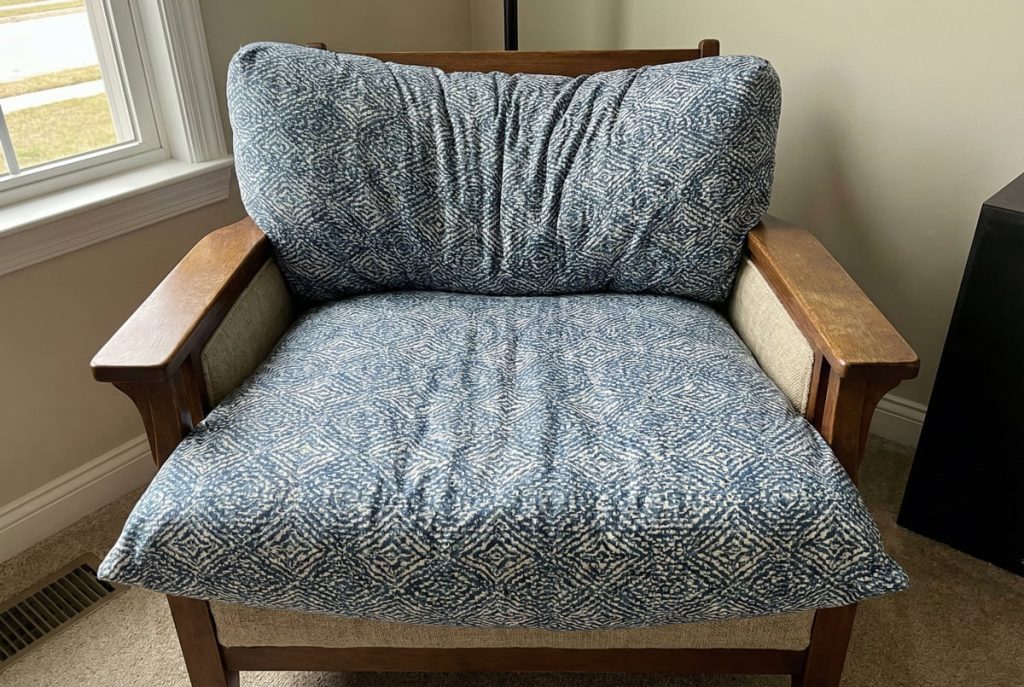
Custom cushion manufacturing operates under fundamentally different economics and priorities. The cost structure allows – and the competitive advantage requires – emphasis on quality and longevity over volume and price.
Professional-Grade Materials
Custom work typically employs foam in the 1.8-2.4 pounds per cubic foot density range for residential applications. This isn’t a marginal upgrade – it’s substantially more resilient material that maintains structural integrity and support characteristics far longer.
The difference becomes stark during winter when you’re sitting for extended periods daily. Store-bought foam that’s already compressed provides inadequate support, leading to discomfort and poor posture. Quality foam maintains its support properties, keeping you comfortable even during hours-long sitting sessions.
| Characteristic | Store-Bought | Custom |
|---|---|---|
| Foam Density | 1.2-1.5 lb/ft³ | 1.8-2.4 lb/ft³ |
| Expected Shape Retention | 12-18 months | 4-6 years |
| Seam Construction | Single-stitch | Double-stitch reinforced |
| Piping Quality | Basic or none | Professional-grade |
| Sizing Precision | Standard sizes | Exact measurements |
| Typical Lifespan | 18-30 months | 5-7 years |
Construction That Withstands Daily Use
Professional upholstery techniques aren’t just about aesthetics – they’re about structural integrity under stress. Reinforced seams distribute tension evenly, preventing the concentrated stress points that cause premature failure. Quality piping maintains cushion shape and protects fabric edges from wear.
These construction details are invisible when cushions are new but become critical as years pass. The difference between a cushion that looks good for six months and one that looks good for six years often comes down to construction quality invisible in initial assessment.
Resilience advantage: Testing by the American Society of Interior Designers found that professional-grade cushion construction withstands approximately 3-4 times more compression cycles before showing structural fatigue compared to standard consumer construction. In practical terms, that’s the difference between replacement every two years versus every seven years.
Perfect Fit Delivers Functional Benefits
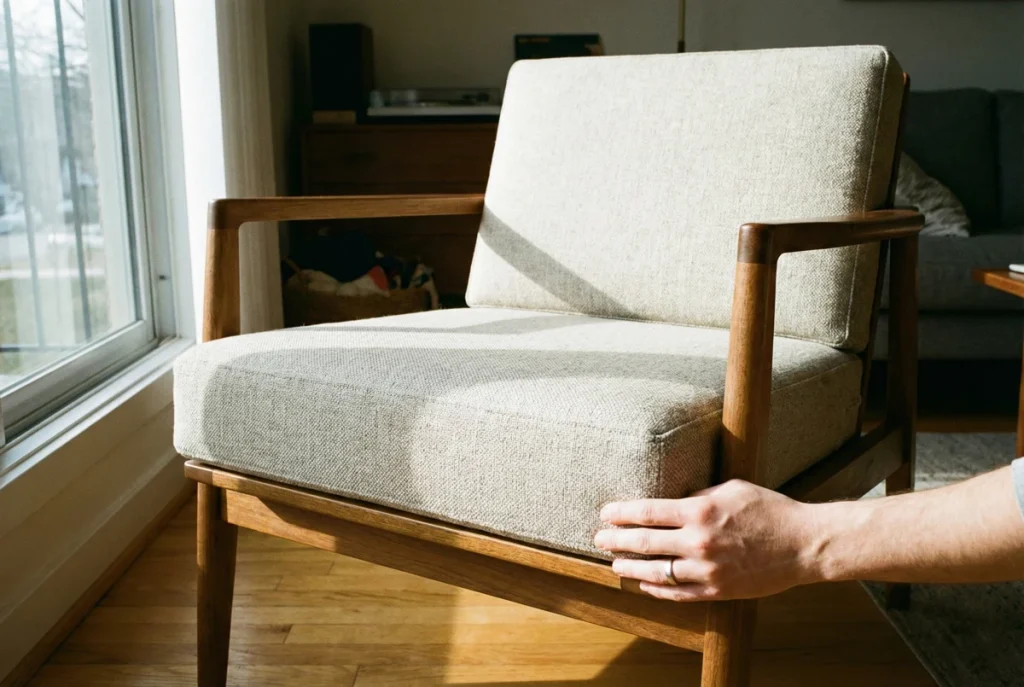
Custom sizing isn’t about perfectionism – it’s about functional performance. A cushion that fits precisely doesn’t shift during use. It doesn’t create gaps where debris accumulates. It doesn’t bunch awkwardly or hang over edges.
For pieces like benches or window seats that rarely match standard dimensions, custom work isn’t a luxury – it’s the only path to cushions that actually function as intended.
Winter: When Differences Become Impossible to Ignore
During summer’s varied activities, you might not notice that your sofa cushion has compressed significantly. You’re sitting briefly before heading outdoors, using furniture in shorter intervals. Winter eliminates this masking effect through sheer volume of use.
Extended Sitting Amplifies Quality Gaps
When you’re settled on your sofa for a 4-hour movie marathon, cushion quality becomes acutely apparent. Store-bought foam that’s already compressed leaves you sinking into furniture frames. You shift position constantly, searching for comfort that isn’t there. Lower back begins aching from inadequate support.
Quality custom cushions maintain their support properties throughout these extended sessions. The higher-density foam doesn’t bottom out. Your posture remains supported naturally rather than requiring constant compensation. The difference between discomfort and genuine relaxation during long winter evenings.
Winter revelation: Many people don’t realize their cushions have degraded until winter’s extended sitting reveals the problem. By then, they’ve endured months of gradual quality decline without recognizing it was happening. Winter doesn’t create the problem – it just makes existing problems impossible to ignore.
Work-From-Home: The Ultimate Cushion Stress Test
For those working from home – whether full-time or hybrid – winter represents peak cushion stress. Long work hours at dining chairs or kitchen seating expose every weakness in cushion quality.
Store-bought cushions not designed for 8-hour daily use fail quickly under this stress. Within months, you’re sitting on essentially flat fabric over hard surfaces, leading to physical discomfort and decreased productivity.
Custom cushions with appropriate foam density and professional construction maintain comfort and support through these demanding use cases. They’re not just more comfortable – they’re actually functional for extended work sessions in ways budget alternatives simply aren’t.

The True Cost Comparison
Initial price is only one component of actual cost. When cushions are compared honestly across their functional lifespan, the economics shift dramatically.
Store-Bought: The Replacement Cycle
Year 1: Purchase $60 cushions. They look good and feel adequate.
Year 2: Noticeable flattening appears. Still usable but comfort declining.
Year 2.5: Cushions significantly compressed. Replacement necessary. Another $60.
Year 4: Second set also degraded. Third purchase required. Another $60.
Year 5.5: Repeat. Another $60.
Total 7-year cost: $240 plus the time and frustration of repeated shopping and installation.
Custom: One-Time Investment
Year 1: Invest $200 in custom cushions with quality foam and professional construction.
Years 2-7: Cushions maintain support and appearance. No replacement needed.
Total 7-year cost: $200.
The Math Is Straightforward
Over seven years, store-bought cushions requiring replacement every 2-2.5 years cost 20% more than custom cushions lasting the full period. And that’s before factoring in the superior comfort experience throughout, the time saved not repeatedly shopping, and the environmental benefit of reduced waste.
The “expensive” option is actually the economical one when measured accurately.
Resilience: The Hidden Quality Factor
Beyond simple longevity, cushion resilience – the ability to bounce back after compression – determines daily comfort experience throughout ownership.
How Foam Recovers (Or Doesn’t)
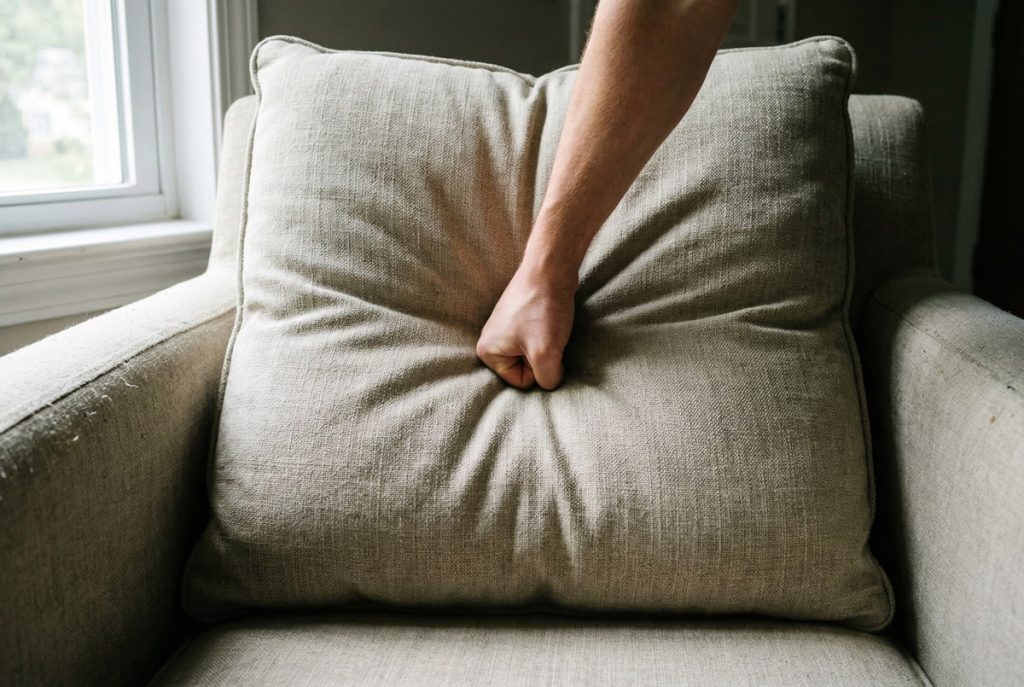
When you sit on a cushion, foam compresses. When you stand, quality foam rebounds to near its original shape. Lower-quality foam rebounds partially, with each compression cycle leaving permanent deformation. Over months, these micro-failures accumulate into visible sag and lost support.
High-density foam used in custom work has superior resilience properties. It returns more completely to original shape after compression, meaning it maintains comfort and support characteristics far longer. This isn’t about initial feel – it’s about sustained performance over years.
A cushion’s quality isn’t evident in how it feels the first day. It’s evident in how it feels on day 500, day 1,000, day 1,500. Resilience is the quality that matters most over time.
Winter’s Resilience Demands
During summer, cushions have time to recover between uses. Winter’s near-constant use provides minimal recovery time. You sit for hours, stand briefly, sit again. This continuous compression cycle reveals resilience differences that lighter use masks.
Low-resilience foam never fully recovers before the next use. Progressive deformation accelerates. By mid-winter, cushions that seemed acceptable in autumn have degraded noticeably.
High-resilience foam maintains performance even under continuous use. It rebounds sufficiently between sitting sessions to prevent progressive compression. The cushion that’s comfortable in November remains comfortable in February.
Fit Precision and Long-Term Satisfaction
Perfect fit isn’t aesthetic preference – it’s functional necessity for sustained satisfaction. Ill-fitting cushions create ongoing frustrations that compound over time.
The Sliding Problem
Cushions slightly too small for their furniture shift during use. Every time you sit or reposition, the cushion moves. This seems like minor annoyance initially but becomes genuine frustration when it happens dozens of times daily for months.
Winter amplifies this because you’re sitting more. The cushion that needed readjustment twice a day in summer needs it ten times a day in winter. Small irritations become significant quality-of-life detractors.
The Gap Issue
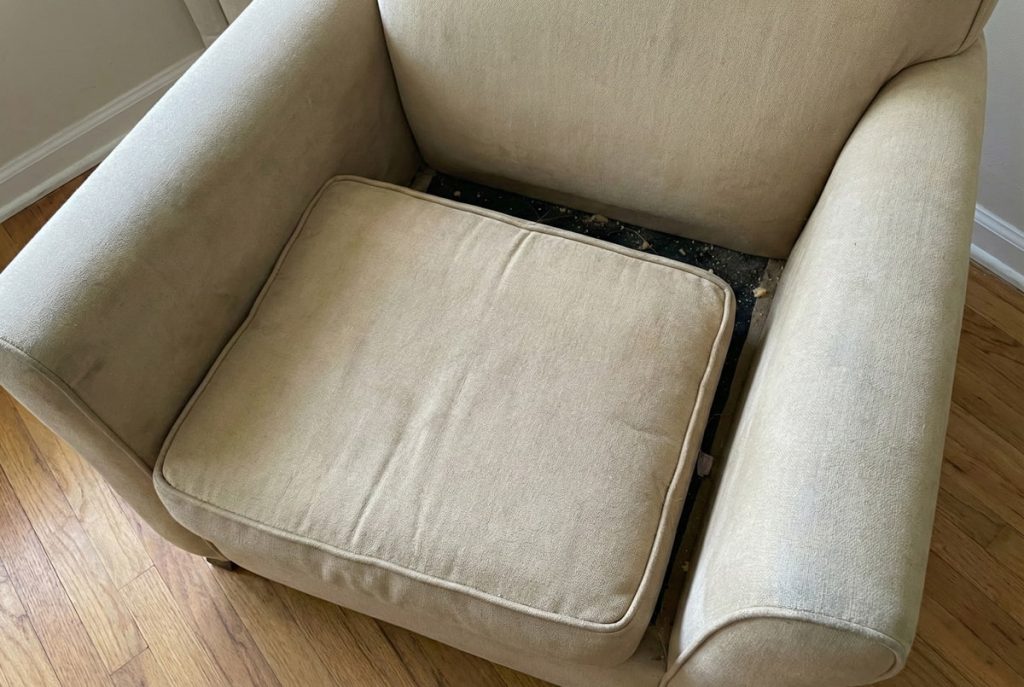
Cushions that don’t fit precisely leave gaps – spaces where you can feel furniture edges, where debris accumulates, where the furniture’s hard surfaces peek through. These gaps worsen over time as cushions compress and shift.
Custom sizing eliminates both problems permanently. The cushion fits exactly, stays in place, and maintains that precise fit throughout its service life. For furniture like living room seating used daily, this fit precision directly impacts long-term satisfaction.
Making the Smart Choice
The custom-versus-store-bought decision ultimately comes down to whether you’re optimizing for initial price or long-term value. These are fundamentally different objectives that lead to different outcomes.
When Store-Bought Makes Sense
Fair assessment requires acknowledging situations where store-bought cushions might be appropriate:
- Temporary furniture: Items you know you’ll replace soon anyway
- Rental properties: Where you won’t be long-term
- Extremely light use: Guest room furniture used twice annually
- Standard dimensions: Furniture that perfectly matches available sizes
- Immediate need: Situations where waiting for custom production isn’t feasible
Even in these cases, understanding the durability limitations helps set appropriate expectations and avoid disappointment.
When Custom Is the Clear Answer
For most primary living space furniture – pieces you use daily and plan to keep long-term – custom work delivers superior value despite higher initial cost:
- Daily-use seating: Sofas, primary chairs, work-from-home dining chairs
- Non-standard furniture: Benches, window seats, unique pieces
- Long-term ownership: Furniture you plan to keep for years
- Comfort priorities: Situations where support and resilience matter
- Quality commitment: When you want the job done right once rather than repeatedly
According to consumer research from National Association of the Remodeling Industry, homeowners who invest in quality custom furnishings report satisfaction rates above 85% over 5+ years, compared to 40% satisfaction for budget alternatives over similar periods. The quality gap translates directly to experience gap.
Environmental consideration: One custom cushion lasting seven years generates significantly less waste than three-to-four store-bought replacements over the same period. Durability isn’t just economically smart – it’s environmentally responsible. Choose quality once over repeatedly choosing cheap.
Winter as the Decision Point
If you’re reading this during winter months, you’re experiencing peak cushion demand firsthand. The extended sitting reveals exactly which seating works and which doesn’t. This makes winter the ideal time to make informed cushion decisions – you’re not guessing about needs, you’re responding to experienced reality.
Moreover, winter gives you months ahead to enjoy the improvement. Invest in quality cushions now, and you have the entirety of remaining winter plus spring to appreciate the difference. Wait until summer, and the benefit is delayed precisely when you’d notice it most.
Beyond the Numbers: Quality of Life Impact
Cushion comparisons focused purely on durability metrics and cost calculations miss something essential – the daily experience of living with your choice.
The Comfort Dividend
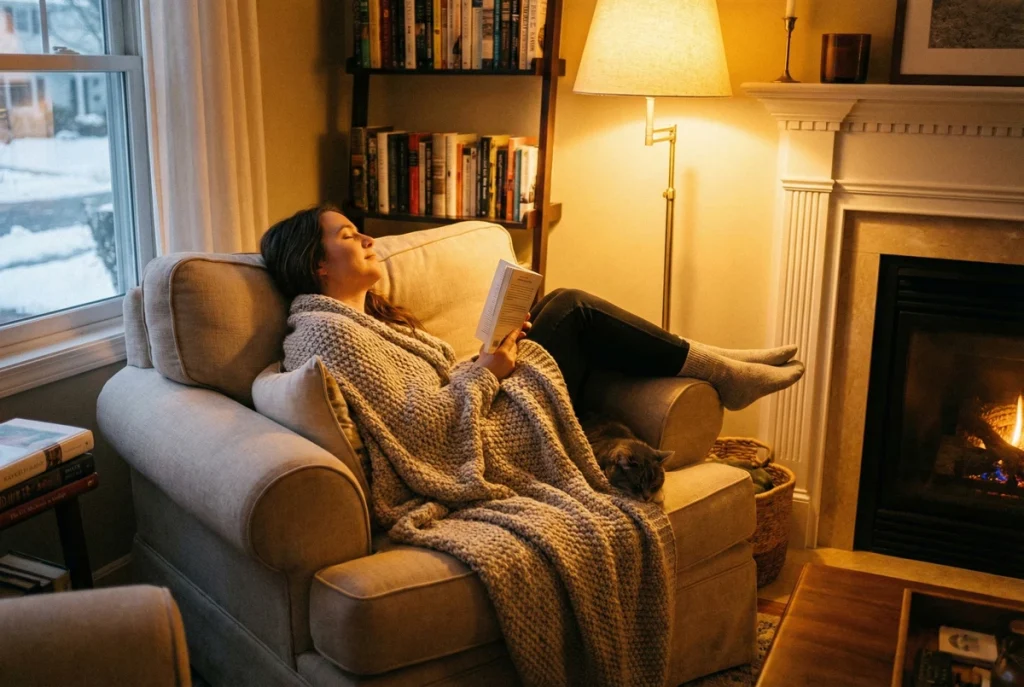
Every hour you spend on genuinely comfortable, properly supportive seating is an hour where your body can fully relax. Your mind isn’t partially occupied managing discomfort. You’re free to focus completely on work, reading, conversation, rest – whatever matters in that moment.
This comfort dividend compounds over time. Hundreds of comfortable hours become thousands. The cumulative quality-of-life improvement from consistently comfortable seating is difficult to quantify but impossible to deny once experienced.
Store-bought cushions might deliver this initially, but as they degrade, so does the experience. Custom cushions maintain that comfort throughout their extended service life, delivering the benefit year after year.
The Satisfaction Factor
There’s genuine satisfaction in owning things that work properly and last appropriately. Custom cushions that fit precisely, support consistently, and maintain appearance over years create this satisfaction every time you use them.
Contrast this with the repeated disappointment of store-bought cushions that need replacement again, the frustration of dealing with poor fit, the resignation to declining quality. These negative experiences accumulate psychologically even if we don’t consciously track them.
Quality is remembered long after price is forgotten. Especially for items we use daily, investing in quality creates ongoing satisfaction that far outlasts the brief pain of initial cost.
Practical Decision Framework
If you’re currently deciding between custom and store-bought cushions, here’s a straightforward framework for making the choice that’s right for your situation:
Ask These Questions
- How often will this furniture be used? Daily use strongly favors custom quality.
- How long do I plan to keep this furniture? Long-term ownership justifies quality investment.
- Do standard sizes actually fit my furniture? Non-standard dimensions make custom the practical choice.
- Am I optimizing for lowest initial cost or best long-term value? Be honest about your actual priority.
- Will I be annoyed replacing these in 18 months? If yes, invest in lasting quality now.
Your answers to these questions should make the appropriate choice clear. There’s no universally correct answer – but there is a correct answer for your specific situation and priorities.
Honest self-assessment: If you’ve replaced the same cushions multiple times already, that pattern will continue with another store-bought purchase. Breaking the cycle requires changing the approach. Custom work isn’t an expense – it’s the solution to repeated expense.
The Winter Testing Period
Winter provides a natural testing period for assessing your current cushion situation. Pay attention during the next few weeks:
- Are you avoiding certain seating because it’s uncomfortable?
- Do you constantly shift position while sitting?
- Can you feel furniture frames through the cushioning?
- Are cushions visibly compressed or misshapen?
- Do they slide around or gap at edges?
If multiple answers are yes, you’re already living with the consequences of inadequate cushion quality. The question isn’t whether to replace them – it’s whether to replace them with similar items that will fail again or invest in quality that lasts.

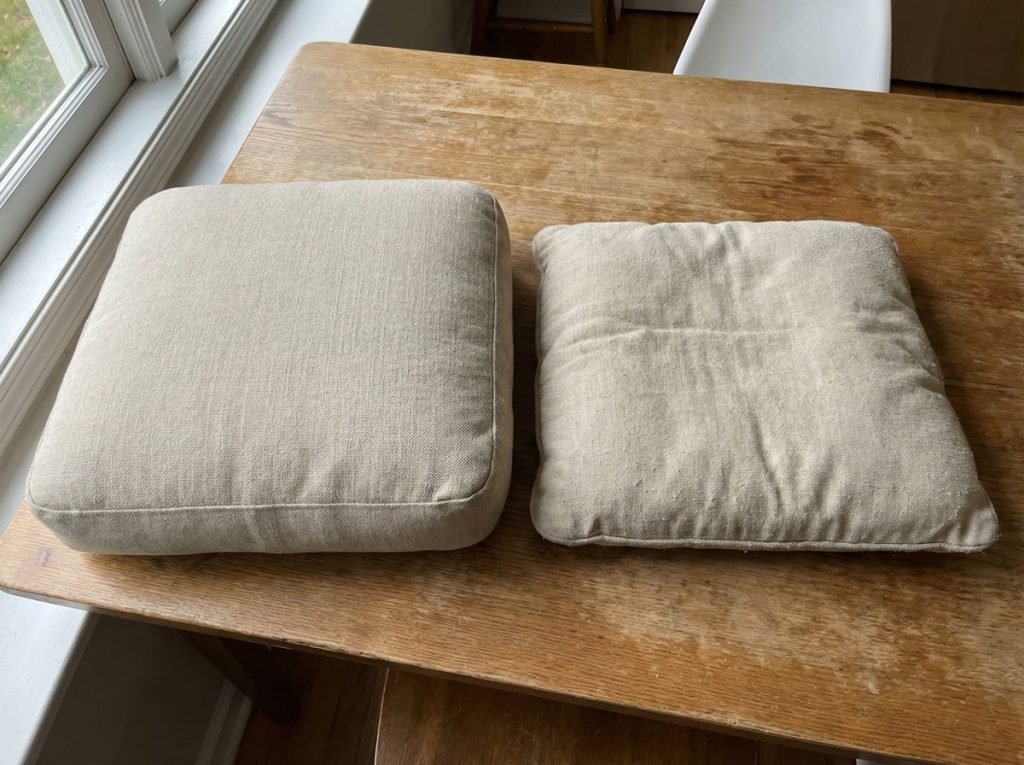
Choose Quality That Lasts
The choice between custom and store-bought cushions is ultimately a choice between short-term savings and long-term value. Between temporary adequacy and lasting quality. Between repeated frustration and sustained satisfaction.
At Rofielty, we specialize in custom cushions built to last. Our approach prioritizes the factors that actually matter over time: high-density foam that maintains resilience, professional construction that withstands daily use, precise sizing for perfect fit, and fabrics selected for durability in real-world conditions.
Whether you need custom bench cushions for unique dimensions, dining seating that supports work-from-home demands, or living room cushions that maintain comfort year after year, we focus on creating pieces that justify your investment through extended service life and consistent quality.
Explore our cushion collections or contact us to discuss custom solutions tailored to your specific furniture and requirements. This winter, invest in comfort that lasts.
The question isn’t whether custom cushions cost more initially – they do. The question is whether that higher initial investment delivers better value over time. The evidence is overwhelming: quality custom cushions outlast store-bought alternatives by 3-4x, fit better throughout their service life, maintain comfort and support characteristics longer, and ultimately cost less per year of satisfactory use. For furniture you use daily and plan to keep long-term, custom isn’t the expensive option – it’s the smart one. Make the choice that serves you well not just today, but for years to come.