
Table of Contents
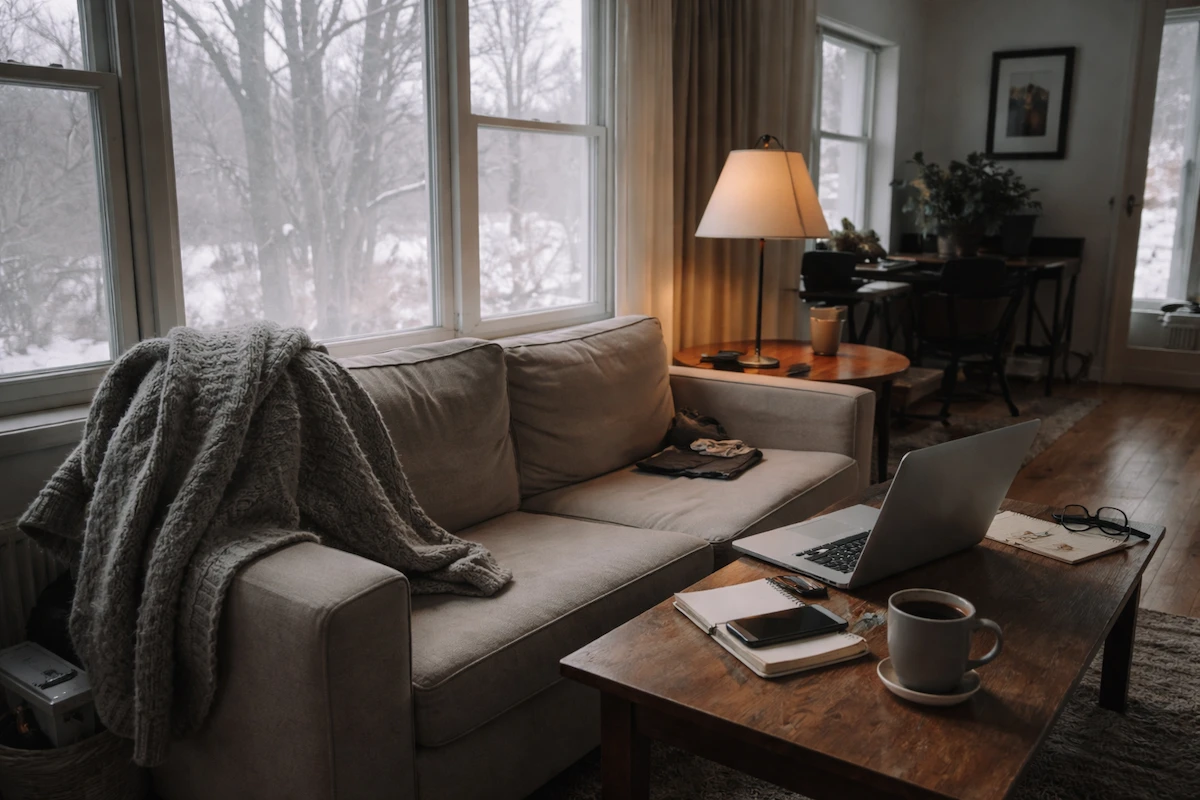
Winter has a way of revealing truths we manage to ignore during busier seasons. When the days are short and cold keeps us indoors, we become acutely aware of every aspect of our home environment. The lighting that seemed adequate in summer feels dim. The heating system we barely noticed in October becomes a constant consideration. And that furniture we’ve been sitting on for years? Suddenly, its inadequacies are impossible to overlook. This isn’t coincidence – it’s winter doing what it does best: forcing us to confront the quality of our indoor comfort. And for those willing to listen, it’s offering the perfect opportunity to make meaningful improvements.

The Winter Reality: We Sit More Than We Think
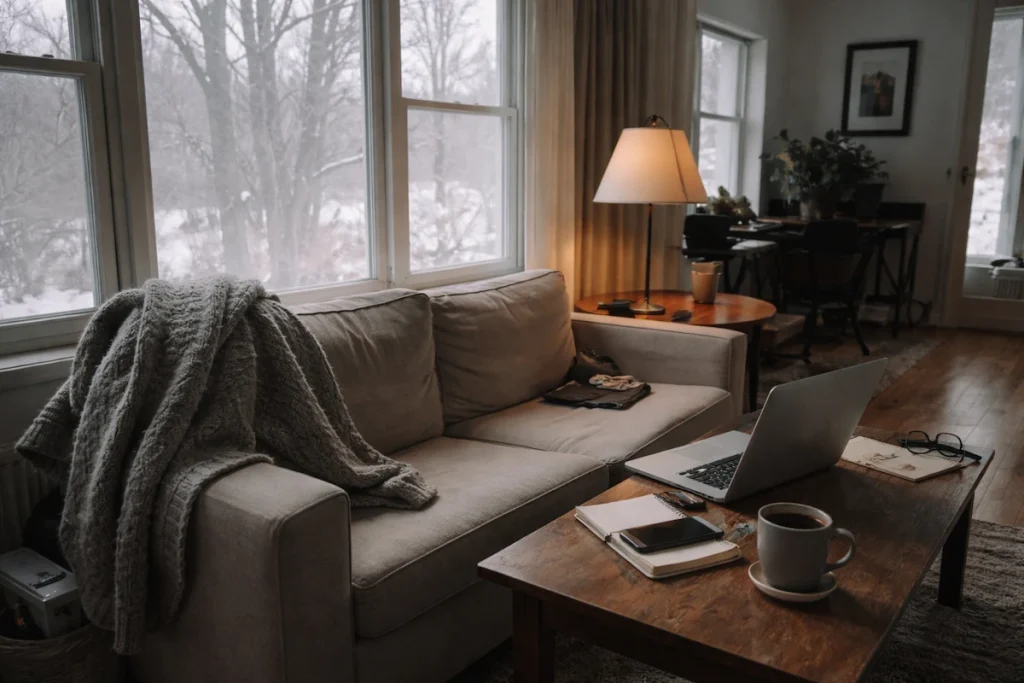
Consider a typical winter day. You wake up and head to the kitchen table for breakfast – sitting. If you work from home, you’re at your desk or dining table for hours – sitting. Evening arrives early, and you settle onto the sofa for dinner, TV, or reading – more sitting. Even social activities move indoors: game nights at the dining table, movie marathons on the couch, long conversations over coffee in the breakfast nook.
The numbers are striking when quantified. According to behavioral research published in the Harvard Health Letter on sedentary behavior, the average person sits for 9-10 hours daily during winter months, compared to 6-7 hours in summer. That’s a 40-50% increase in sitting time, translating to roughly 90 additional hours per month spent in seated positions.
90+
Extra hours spent sitting each winter month compared to summer
This dramatic increase in sitting duration means furniture that felt “fine” during warmer months becomes genuinely problematic in winter. A dining chair that’s tolerable for a 30-minute meal becomes torturous during a 3-hour work session. A sofa that’s adequate for brief evening relaxation feels punishing during weekend-long Netflix marathons.
Work-From-Home Amplifies the Issue
For the millions now working remotely at least part-time, winter compounds an already significant seating challenge. Office chairs were designed for 8-hour workdays. Your dining chairs weren’t. Your kitchen bench cushions definitely weren’t.
Yet here we are, spending full workdays on furniture never intended for that purpose. During summer, this might be punctuated by outdoor lunch breaks, evening walks, weekend activities. Winter removes these natural interruptions, creating extended periods of uninterrupted sitting on inadequate seating.

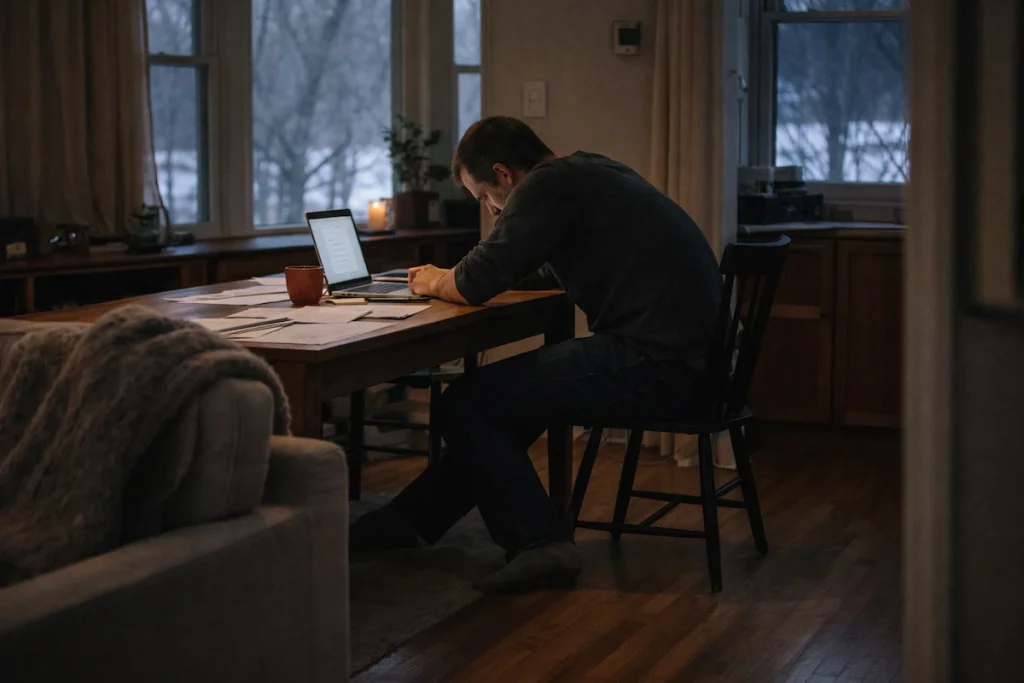
The physical cost accumulates silently. Lower back discomfort that starts as minor stiffness. Shoulder tension from poor posture compensation. Restlessness and frequent position shifts that interrupt concentration. These aren’t just comfort issues – they’re productivity and health concerns directly traceable to inadequate seating support.
When Discomfort Becomes Unavoidable
Summer’s varied activities mask seating inadequacy. You’re not sitting long enough in any one place for discomfort to really register. Winter eliminates this masking effect. When you’re settled into the same spot for hours at a stretch, every flaw in your seating becomes magnified.
That slight sag in your sofa cushion? Barely noticeable during a quick evening show. Deeply uncomfortable during a 4-hour Sunday afternoon reading session. The dining chair that’s lost its padding? Tolerable for dinner. Painful during tax preparation or remote work marathons.
The furniture doesn’t change between seasons. But winter’s extended indoor time reveals its true character – and often, that character is found wanting.
The Psychological Weight of Persistent Discomfort
Beyond the physical implications, chronic low-level discomfort extracts a psychological toll. It’s background noise you learn to tune out, but tuning out requires mental energy. That energy could be directed toward work, creativity, relationships, rest – instead, it’s being consumed by constant micro-adjustments and position shifts.
The Compounding Effect: Research in environmental psychology shows that persistent minor discomforts in our primary living spaces contribute to elevated stress hormones and reduced overall wellbeing. We adapt to discomfort rather than eliminating it, paying an ongoing psychological price we barely register consciously but that affects us nonetheless.
Winter, with its forced indoor time, makes this psychological burden harder to ignore. You can’t escape outdoors when your furniture feels wrong. You can’t compensate with different activities when everything happens sitting down. The discomfort follows you through your entire day.
Why “Investment” Is the Right Framework
Let’s address the terminology directly. This article frames better seating as an investment rather than a purchase, and that distinction matters profoundly.
Purchases are transactions – you exchange money for a product. Investments are commitments that generate ongoing returns. Quality seating upgrades fall decidedly in the investment category. The return isn’t financial, but it’s real and measurable: improved physical comfort, better posture support, enhanced productivity, reduced stress, and greater overall wellbeing.
Calculating the Real Return
Consider the investment framework applied to cushion replacement for your most-used seating:
- Initial investment: $200-400 for quality custom cushions
- Lifespan: 5-7 years with proper care
- Daily benefit period: 4-6 hours of improved sitting comfort
- Annual “return”: 1,460-2,190 hours of better seating experience
Over seven years, that’s roughly 15,000 hours of improved comfort for an investment of perhaps $300. That works out to $0.02 per hour – two cents – for measurably better quality of life during a fundamental daily activity.
Investment perspective shift: We readily spend $5 daily on coffee – $1,825 annually – for a 15-minute pleasure. Yet we hesitate to invest $300 once for equipment that affects our comfort 4-6 hours every single day for years. When the actual usage-per-dollar is calculated, quality seating becomes one of the highest-return investments possible in daily wellbeing.
Comparing Alternative “Solutions”
What are the alternatives to investing in proper seating comfort?
Doing nothing: Costs zero dollars. Costs ongoing physical discomfort, potential long-term postural issues, reduced productivity, and persistent low-level stress. The “savings” are illusory when these costs are factored honestly.
Cheap replacements: $50-80 for budget cushions that compress within 6-12 months, requiring repeated replacement. Total cost over seven years: $350-560, plus the frustration of constant re-shopping and installation. More expensive than quality investment, with inferior results throughout.
Furniture replacement: Thousands of dollars to replace entire pieces when often only the cushioning needs updating. Dramatically more expensive, environmentally wasteful, and logistically complex.
Viewed through this lens, investing in quality cushion replacement isn’t extravagant – it’s the most economically rational and practically effective option available.
The Custom Advantage in Winter Context
Standard, off-the-shelf cushions exist because they work for common furniture dimensions. But “works for” and “works perfectly” are vastly different standards. In summer, this distinction might not matter much. In winter, when you’re sitting for extended periods daily, that gap between “adequate” and “optimal” becomes critical.
Precision Fit Matters More Under Extended Use
A cushion that’s an inch too short allows a gap where you sink unevenly. One that’s slightly too large bunches and shifts. These imperfections are minor annoyances during brief sitting. During hours-long sessions, they become sources of constant adjustment and discomfort.
Custom sizing eliminates this friction entirely. The cushion fits exactly as designed – no gaps, no bunching, no shifting. For pieces like benches or window seats that almost never match standard dimensions, custom work isn’t a luxury – it’s the only path to actual functionality.
Support Tailored to Purpose
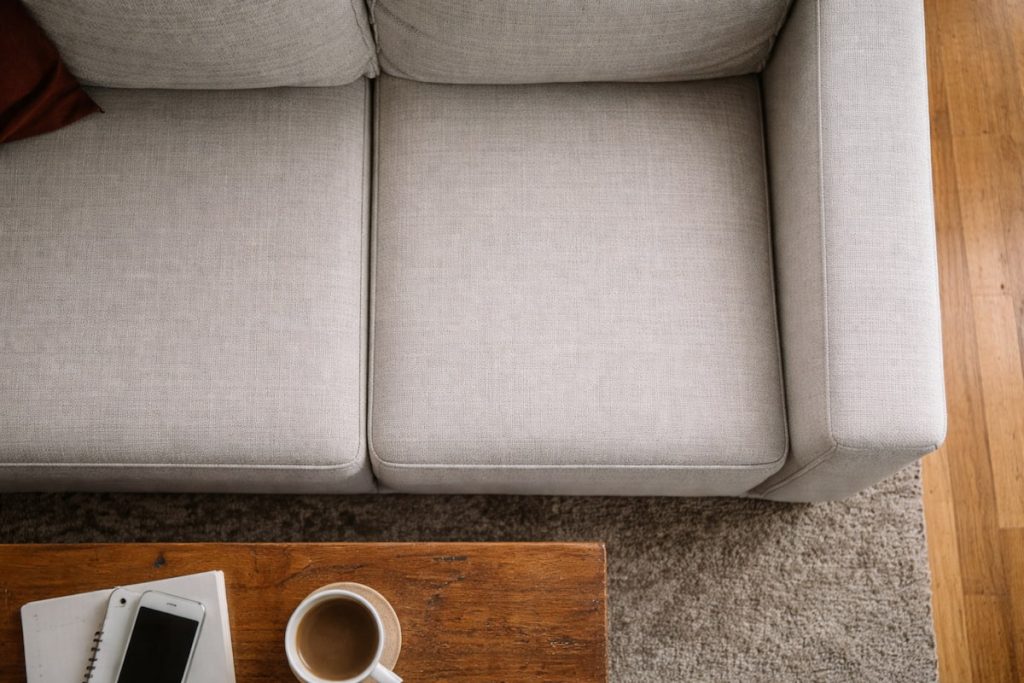
Off-the-shelf cushions use whatever foam maximizes manufacturer profit margins. Custom cushioning uses foam selected for your specific requirements – balancing support, comfort, durability, and budget based on actual usage patterns.
Dining chairs used for work-from-home need firmer, higher-density foam that maintains support during 8-hour sessions. Reading nooks might prioritize slightly softer comfort for relaxation. Heavy daily-use sofa seating requires different specifications than occasional guest room furniture.
According to research from the American Society of Interior Designers, appropriate foam density selection can extend comfortable cushion life by 60-80% compared to generic options. That’s not marginal improvement – it’s the difference between 3 years and 6 years of satisfactory service.
Ergonomic consideration: Proper cushioning isn’t just about comfort – it’s about maintaining healthy posture during extended sitting. Quality foam with appropriate density and resilience helps support natural spinal curves, reducing strain on lower back muscles and preventing the forward slouch that develops when cushions compress prematurely.
Durability Through Professional Construction
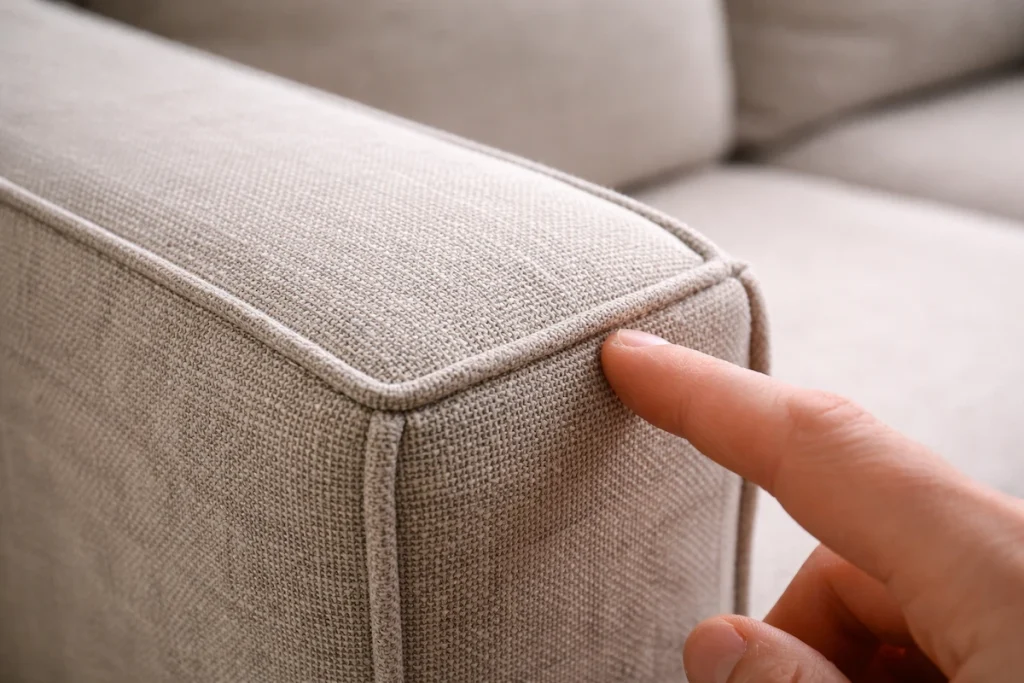
The difference between consumer-grade and professional construction becomes evident over time. Mass-produced cushions often use cost-cutting techniques: minimal stitching, weak seams, inferior zippers for removable covers, piping that separates or frays.
Professional custom work employs upholstery-grade construction: reinforced stitching, durable piping, quality zippers, proper tension in fabric application. These details seem minor initially but determine whether your cushion maintains its integrity for two years or seven.
For frequently used items like dining chair seating or primary living room chairs, this durability difference directly impacts the investment’s value. Better construction means longer service life, fewer replacements, and sustained comfort throughout the ownership period.
Winter as the Strategic Investment Window
Beyond the practical realities of extended sitting time, winter offers specific strategic advantages for seating investments that make acting now particularly logical.
You’ll Actually Notice the Improvement
Install new cushions in June, and you might appreciate them briefly before spending the next several months primarily outdoors. Install them in January or February, and you have months of heavy indoor use ahead to fully experience and appreciate the improvement.
The investment’s value becomes immediately and repeatedly evident. Every work session, every evening on the sofa, every weekend reading marathon reinforces that the decision was correct. This psychological reinforcement matters – it transforms the purchase from expense to valued asset in your daily life.
Production Timing Favors Winter Orders
For custom work, lead times vary significantly by season. Spring sees a rush as people prepare for warmer months and outdoor entertaining. Summer continues this pattern with vacation home preparations and seasonal improvements.
Winter? Production schedules are typically less crowded. The same custom work that might take 6-8 weeks in April could be completed in 3-4 weeks in January or February. This faster turnaround means less waiting and quicker realization of the investment’s benefits.
Post-Holiday Mindset Supports Quality Decisions
January and February represent a psychological shift from holiday consumption toward intentional life improvement. The decorative, gift-focused spending of December gives way to more practical, personal-benefit investments.
This mindset favors thoughtful quality decisions over impulse purchases. You’re more likely to properly measure, carefully select appropriate fabrics, and choose durable construction when approaching the decision from an investment framework rather than a shopping mindset.
Timing wisdom: The best time to invest in comfort improvements is when you’ll use them most intensively. For indoor seating, that’s unequivocally winter – the season when your furniture works hardest and its quality matters most. Waiting for spring means enduring months of unnecessary discomfort before even beginning the improvement process.
Beyond Furniture: Investment in Wellbeing
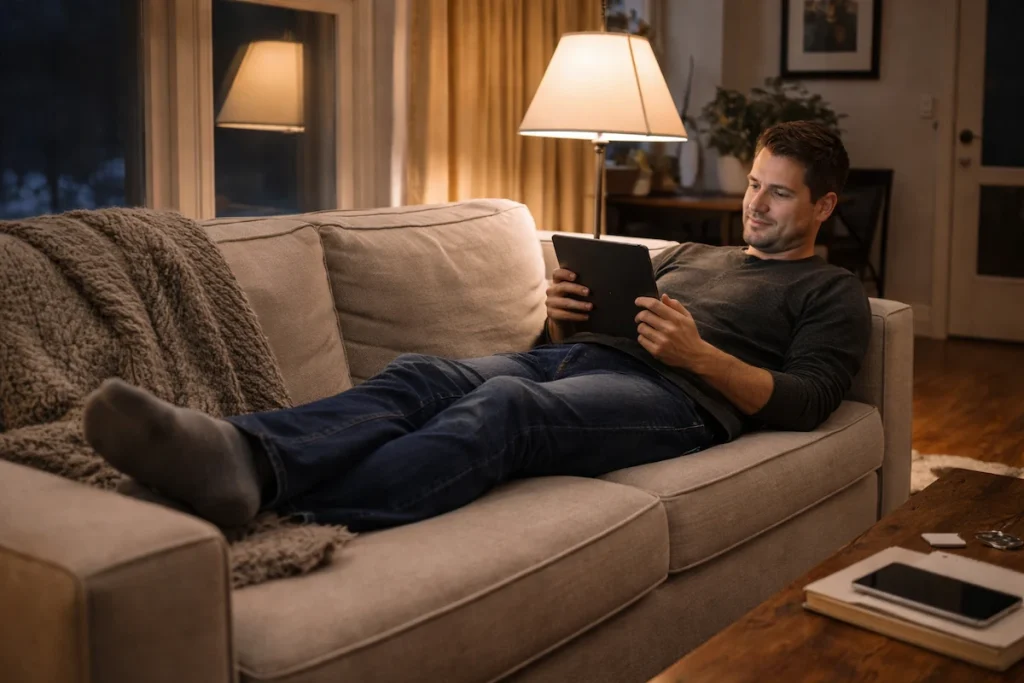
Framing seating improvement as furniture investment misses the deeper point. You’re not really investing in cushions – you’re investing in your own daily experience of life at home.
Every hour spent in physical comfort rather than discomfort is an hour where your body can fully relax, where your mind isn’t partially occupied managing pain or awkwardness, where you’re free to focus completely on work, relationships, rest, or whatever matters in that moment.
This might sound abstract, but its effects are concrete. Better focus during work hours. More patient engagement during family time. Actual relaxation during rest periods rather than restless repositioning. These improvements compound over weeks and months into meaningfully enhanced quality of life.
We spend roughly one-third of our waking hours sitting. Ensuring those hours are physically comfortable isn’t indulgence – it’s basic self-respect.
The Long View of Health
Poor seating support contributes to musculoskeletal issues that develop slowly over years. Lower back pain from inadequate lumbar support. Neck strain from forward head posture compensation. Hip discomfort from uneven pressure distribution. These problems don’t announce themselves dramatically – they accumulate incrementally until suddenly they’re chronic conditions requiring medical intervention.
Quality seating won’t prevent all such issues, but it removes one significant contributing factor. Proper support helps maintain healthier posture naturally, reducing strain on joints and muscles. Over years and decades, this seemingly small difference may prevent significant health problems.
According to medical research compiled by the National Institutes of Health on prolonged sitting, appropriate seating support can reduce lower back pain incidence by up to 30% among people who sit extensively. That’s substantial preventive benefit from what appears to be simple furniture improvement.
Making the Investment Decision
If you’ve read this far, you’re likely already considering whether this winter is the time to address your seating situation. Here are the practical considerations that should guide your decision:
Honest Assessment of Current State
Sit on each piece of furniture you use regularly. Not just perch briefly – actually sit as you would normally for an extended period. Be honest about what you feel:
- Are you sinking into compressed foam rather than being supported?
- Do you find yourself constantly shifting position for comfort?
- After an hour, are you sore or stiff?
- Do you avoid certain seating even though it’s conveniently located?
- Can you feel the furniture frame through the cushioning?
If multiple answers are yes, your seating has passed beyond adequate into genuinely problematic territory. This isn’t something that improves on its own – foam doesn’t spontaneously re-expand, fabric doesn’t magically regain structure.

Prioritizing Based on Use
Not all seating requires simultaneous upgrade. Start with the pieces you use most heavily – typically your primary sofa or work-from-home seating. These deliver the highest return on investment because you use them most frequently.
Secondary seating – guest room furniture, occasional chairs, decorative pieces – can wait. Focus resources where they’ll create the most meaningful daily improvement. For most households, this means living room seating and dining/work chairs deserve priority attention.
Specialized items like breakfast nook seating or reading chaises fall somewhere in between – assess based on your actual usage patterns rather than theoretical importance.
Quality Specifications That Matter
When selecting or ordering replacement cushions, certain specifications deserve particular attention:
- Foam density: Minimum 1.8 pounds per cubic foot for daily-use seating; 2.0+ for heavy use
- Fabric durability: Performance fabrics for high-traffic areas; natural fibers acceptable for lighter use
- Construction quality: Double-stitched seams, reinforced corners, quality piping
- Sizing precision: Custom measurements for non-standard furniture
- Maintenance accessibility: Removable, washable covers extend practical lifespan significantly
These specifications directly determine whether your investment delivers value for two years or seven. Economizing on quality here typically costs more long-term through premature replacement needs.
Taking Action This Winter
Understanding why winter is optimal for seating investment is useful only if it leads to actual improvement. Here’s the straightforward path from consideration to implementation:
- Assess honestly – Which seating actually needs replacement versus which is still serviceable?
- Measure accurately – Proper dimensions are essential for custom work or even finding appropriate ready-made options
- Research fabric options – Consider your lifestyle honestly when selecting materials
- Set realistic budget – Factor in cost-per-year rather than just initial price
- Order promptly – Especially for custom work, earlier ordering means faster delivery and more winter to enjoy the improvement
The process isn’t complicated, but it requires actual execution. The gap between “I should probably do this” and “I’ve done this” is where most home improvements die. Winter’s extended indoor time makes this gap particularly costly – every week of delay is another week of unnecessary discomfort.
Invest in Your Daily Comfort
At Rofielty, we approach seating comfort as the long-term investment it truly is. Our cushion collections prioritize lasting quality, proper support, and precise fit – factors that determine whether your investment serves you well for years or disappoints within months.
Winter reveals what matters in our homes – and comfortable, supportive seating matters profoundly. The hours you’ll spend sitting over the coming months deserve to be comfortable hours, supported hours, pain-free hours.
Whether you need custom solutions for unique furniture or quality options for standard pieces, we focus on the specifications that actually matter: appropriate foam density, durable construction, accurate sizing, and materials suited to real-world use.
This winter, invest in comfort that lasts. Your body will thank you every single day.
The truest test of any home improvement is whether, months or years later, you’re still glad you made the change. Quality seating investment passes this test reliably. Six months from now, when you settle onto your sofa after a long day and feel actual support instead of sagging into a crater, when you work through an afternoon at the dining table without shifting constantly for comfort, when you spend a Sunday reading in genuine relaxation rather than restless discomfort – you’ll remember this winter as the season you finally prioritized your own daily wellbeing. And that’s an investment that pays returns every single day.