
Skill Level: Intermediate Time: 4-6 hours
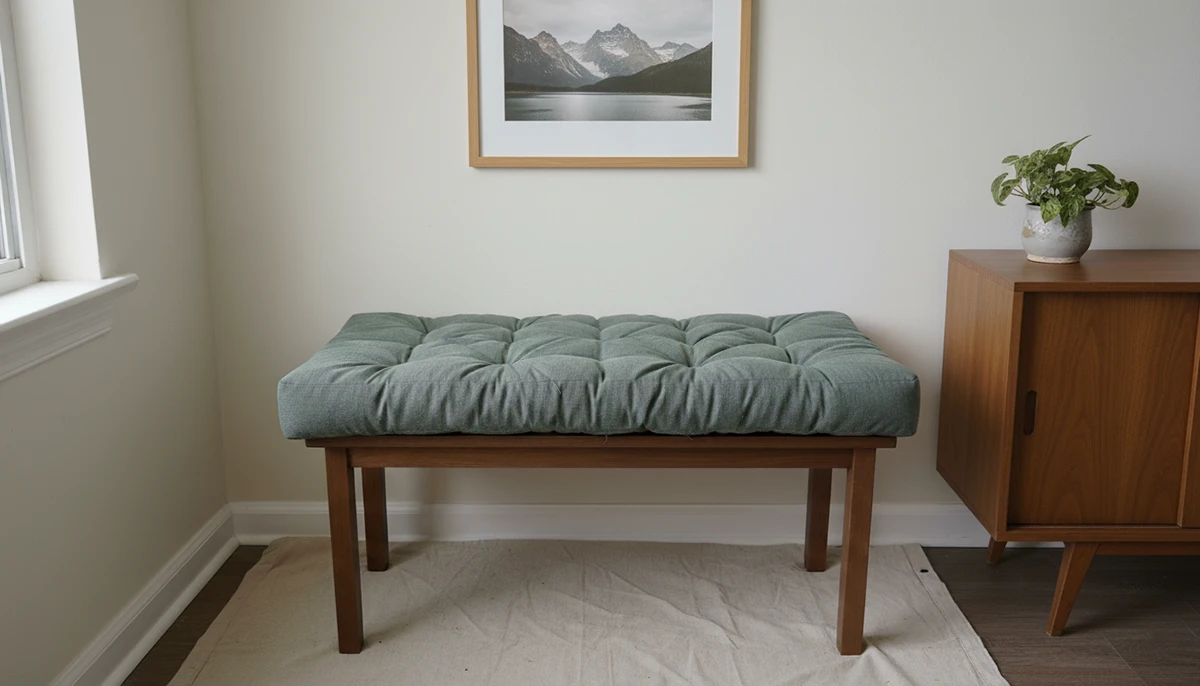
So you want to make a tufted bench cushion? Great choice! I'll be honest with you – this isn't the easiest first sewing project, but it's definitely doable if you're willing to take your time and follow the process carefully. I made my first tufted cushion about two years ago, and while it wasn't perfect, it turned out way better than I expected.
The thing about tufted cushions is they look so professional and expensive that people assume they're incredibly difficult to make. The truth? It's really just a series of simple steps that, when done in the right order, create that gorgeous quilted effect. Plus, making your own means you get exactly the size, fabric, and button placement you want – something that's hard to find in stores.
Understanding Tufted Cushions
Before we jump into the how-to, let's talk about what makes a cushion "tufted" and why you'd want one. Tufting is essentially the process of pulling fabric and filling together at specific points, creating those signature dimples or buttons you see on fancy furniture.
Beyond just looking nice, tufting serves a practical purpose – it keeps the filling from shifting around inside the cushion. Without tufting, foam and batting can bunch up, leaving some areas overstuffed and others flat. The tufts hold everything in place, ensuring even distribution of materials throughout the cushion's life.

Types of Tufting Patterns
Diamond pattern: This is the classic look you see on traditional upholstered furniture. Buttons are arranged in offset rows creating diamond shapes between them. It's what I used for my first project.
Grid pattern: Buttons line up in straight rows both horizontally and vertically, creating a more modern, geometric look. Easier to measure and mark than the diamond pattern.
Custom placement: You can really put buttons anywhere you want. Some people do just a few buttons for a minimalist look, while others create complex patterns.
For your first tufted cushion, I'd recommend either a simple grid or just 4-6 buttons in a basic arrangement. You can always get more ambitious with future projects once you understand the technique.
Materials You'll Need
Essential Materials
Fabric: 2-3 yards depending on cushion size (I recommend upholstery-weight fabric)
High-density foam: 3-4 inches thick, cut to your bench dimensions
Batting: 1-2 layers to wrap the foam
Covered buttons: 6-12 buttons (1 inch diameter works well)
Upholstery thread: Heavy-duty thread that matches your fabric
Long upholstery needle: At least 6 inches long
Fabric marker or chalk: For marking button placement
Measuring tape and ruler
Sharp scissors or rotary cutter
Sewing machine (or you can hand-sew, though it takes longer)
Pins and safety pins
According to the Joann Fabrics buying guide, upholstery-weight fabrics (typically 8+ ounces) work best for cushions because they're durable enough to withstand the tension from tufting without tearing.
Budget Tip: You don't need to buy expensive decorator fabric for your first attempt. I used a heavy cotton canvas from the clearance section at my local fabric store, and it worked perfectly. Save the pricey fabrics for after you've practiced the technique.
Measuring and Planning Your Cushion
This step is critical – measure twice (or three times), cut once. Trust me on this. I once cut foam an inch too short and had to start over.
Getting Accurate Measurements
Measure your bench seat's width and depth. For most benches, you'll want the cushion to cover the entire seating surface without hanging over the edges excessively. I like to have about half an inch of overhang on all sides – looks intentional without being sloppy.
Thickness is personal preference, but 3-4 inches works well for most applications. Thinner feels too firm and looks skimpy, while thicker can look bulky and uses more materials.
Planning Button Placement
Once you know your cushion dimensions, plan where buttons will go. I sketch this out on graph paper first – it helps visualize the final look and calculate exact placement.
For a standard bench cushion (let's say 48 inches by 18 inches), you might do two rows of 4 buttons each, spaced about 10-12 inches apart. The key is keeping spacing consistent and ensuring buttons aren't too close to the edges (at least 3-4 inches from any edge).
| Cushion Size | Suggested Button Count | Pattern Type |
|---|---|---|
| Under 36" long | 4-6 buttons | Simple grid |
| 36"-54" long | 6-10 buttons | Grid or diamond |
| Over 54" long | 10-15 buttons | Diamond pattern |
Preparing Your Foam and Batting
Start by cutting your foam to size. Use a sharp knife or electric carving knife (yes, really – they work great for foam). Cut slowly and try to keep your cut as straight as possible. It doesn't have to be perfect since it'll be covered, but lumpy edges can show through the fabric.
Wrap the foam in batting – this creates a softer surface and helps the fabric glide over the foam rather than catching on it. I use two layers of batting, wrapping them like you're wrapping a present. Secure with a few safety pins on the bottom.
Pro tip from my mistakes: Don't skimp on the batting. I tried to save money by using just one thin layer on my first cushion, and the foam texture showed through the fabric. Two good layers of batting create a smooth, professional appearance.
Cutting and Preparing Fabric
For the top and bottom fabric pieces, cut rectangles that are 2-3 inches larger than your foam on all sides. So if your foam is 48×18 inches, cut fabric pieces about 52×22 inches. This extra fabric allows for seam allowances and the depth created by tufting.
If you're adding piping or boxing (side panels), you'll need additional fabric strips. For a basic tufted cushion without boxing, you can skip this – the top and bottom pieces will be sewn together directly.
Marking Button Placement
Lay your top fabric piece right-side down on a flat surface. Using your measurements from the planning stage, mark where each button will go. I use a fabric marker that disappears over time – test it on a fabric scrap first to make sure it doesn't leave permanent marks.
Mark both the top fabric piece and the bottom piece in the exact same locations. This is crucial – the buttons need to go through both sides symmetrically.
Common Mistake Alert: Make sure you're marking on the WRONG side of the fabric (the side that won't show). I once marked button placements on the right side of fabric and had to start over with new material. Learn from my stupidity.
The Tufting Process
This is where the magic happens. Take a deep breath – it's not as hard as it looks.
1 Thread Your Needle
Cut a piece of upholstery thread about 24 inches long. Thread it through your long upholstery needle, and tie the two ends together so you're working with a double strand. This creates a stronger hold.
2 Attach First Button
Starting from the bottom fabric piece (the side that won't show), push your needle up through your first marked spot. It should go through the fabric, through the batting, through the foam, through the top batting, and out through the top fabric at the corresponding marked spot.
Slide a button onto the needle, then push the needle back down through the cushion, coming out near where you started on the bottom. It doesn't have to be the exact same hole – within a quarter inch is fine.
3 Secure the Tuft
Here's the tricky part – you need to pull the thread tight enough to create a nice deep tuft, but not so tight that you tear the fabric. Pull firmly and steadily. You should see the button sink into the cushion and the fabric gather around it creating that signature dimpled effect.
Once you've got the right tension, tie off the thread on the bottom side. I do several square knots to make sure it's secure. Some people attach a second button on the bottom for extra security, which works well for cushions that get heavy use.
4 Repeat for All Buttons
Continue this process for each button placement. Take your time – rushing leads to uneven tufts. After completing all buttons, check that they're all pulled to roughly the same depth. If one looks shallower than the others, you can carefully re-tuft it.
Helpful Hint: Work from the center outward when placing buttons. This helps keep the fabric from bunching up in weird ways. I learned this after fighting with a cushion that looked lumpy because I worked from one end to the other.
Finishing the Edges
Once all your buttons are secured, it's time to finish the cushion edges. This is where the cushion starts to actually look like a cushion.
Simple Knife Edge Finish
The easiest method is a knife edge – basically just sewing the top and bottom pieces together around the perimeter. Pin the top and bottom fabric pieces together with right sides facing, leaving the batting and foam sandwiched in the middle.
Sew around the entire perimeter using a half-inch seam allowance. Leave an 8-10 inch opening on one side so you can turn the cushion right-side out. When sewing through all these layers, go slowly and use a heavy-duty needle on your machine.

Turning and Closing
After sewing, trim excess fabric from the corners (not too close to the stitching – leave about a quarter inch). This helps corners look crisp when turned right-side out.
Turn the cushion through the opening you left. This can take some wrestling, especially with larger cushions. Be patient and gentle – you don't want to pop any seams. Work the corners out fully so they're nice and square.
Once turned, close the opening. You can hand-stitch it closed with a blind stitch (nearly invisible when done well), or carefully machine-stitch close to the edge. I usually hand-stitch because it's more hidden, even though it takes longer.
Adding Optional Features
Want to take your cushion up a level? Consider these additions:
Piping
Piping along the edges gives a polished, professional look. You can buy pre-made piping or make your own by covering cording with bias-cut fabric strips. Sandwich the piping between the top and bottom fabric pieces when sewing the perimeter.
I didn't add piping to my first cushion, but I did on my second, and the difference in appearance was notable. It's worth the extra effort if you want that high-end look.
Ties or Velcro
If you want to secure the cushion to your bench, add ties at the back corners before sewing the perimeter. Just fold fabric strips in half, tuck them between the top and bottom pieces at appropriate spots, and sew them in when you do the edge seaming.
Alternatively, you can attach velcro strips after the cushion is complete. This works well for benches where you want the cushion to stay put but still be removable for cleaning.
For specialized applications like custom bench cushions or outdoor tufted cushions, professional manufacturers often include these features as standard.

Troubleshooting Common Issues
Even following instructions carefully, you'll likely encounter some hiccups. Here are solutions to problems I faced:
Uneven tufts: If some buttons are deeper than others, it's usually because the thread tension wasn't consistent. You can carefully cut the thread on the bottom, pull the tuft to the correct depth, and re-tie. It's tedious but fixable.
Fabric puckering between buttons: This often happens if buttons are too close together or if you pulled the thread too tight. Prevention is easier than fixing this one – plan adequate spacing and don't over-tighten.
Buttons pulling through fabric: This means your fabric is too lightweight or the thread was pulled way too tight. If it happens during construction, reinforce the area with an extra fabric layer on the underside before re-tufting.
Lumpy appearance: Usually caused by insufficient batting or uneven foam. Make sure your batting is smooth and your foam is reasonably flat and even before starting.
When to Call It: Sometimes a project just isn't working out. If you're several hours in and hate how it's turning out, it's okay to stop and start fresh with new materials. I abandoned my second attempt at a tufted cushion halfway through when I realized I'd marked the buttons completely wrong. Better to restart than finish something you won't be happy with.
Care and Maintenance
Once you've put all this work into creating a tufted cushion, you'll want to keep it looking good. Here's how:
Regular vacuuming: The tufted areas collect dust and debris. Vacuum gently with an upholstery attachment every week or two.
Spot cleaning: Address spills immediately by blotting (never rubbing) with a clean cloth. Use mild soap and water for most stains, testing on an inconspicuous area first.
Rotation: Flip and rotate your cushion regularly to ensure even wear. This is especially important for cushions on heavily-used benches.
Protecting from sun: Direct sunlight fades fabric over time. If your bench is near windows, consider UV-protective window treatments.
According to Better Homes & Gardens, regular maintenance significantly extends the life of upholstered items, often doubling their usable lifespan.

When DIY Doesn't Make Sense
Look, I'm all for DIY projects, but let's be realistic about when making your own tufted cushion might not be the best choice:
If you need multiple matching cushions (the time investment multiplies quickly)
If you're using expensive fabric (the learning curve means your first attempt might not be perfect)
If you don't have a sewing machine or basic sewing skills
If you need the cushion quickly (this project takes several hours minimum)
If you want complex shapes or professional finishing details
Sometimes the time, materials, and potential do-overs cost more than just ordering a custom cushion from professionals who do this every day. There's no shame in that – it's just smart resource management.
Skip the DIY Learning Curve?
While making your own tufted cushion can be rewarding, we understand that not everyone has the time, tools, or inclination for a multi-hour sewing project. That's where professional custom cushion makers come in.
At Rofielty, we create professionally tufted bench cushions with precise button placement, expert construction, and high-quality materials. Our cushions feature proper foam density for long-term comfort, durable upholstery-grade fabrics, and finishing details that are difficult to achieve with DIY methods.
Choose from our selection of ready-made tufted cushions or work with our design team to create fully custom pieces that perfectly match your dimensions and style preferences. We handle the technical challenges while you enjoy the results.
Explore our fabric collection to see the premium materials we work with – all selected specifically for durability and appearance in upholstered applications.
Final Thoughts
Making a tufted bench cushion is definitely a project that requires patience and attention to detail, but it's absolutely achievable for motivated beginners. The key is not rushing through any step and being willing to problem-solve when things don't go perfectly.
My first tufted cushion took me about six hours spread over two days, and while I can see its imperfections, I'm still proud of it. It's been on my entryway bench for two years now and still looks pretty good. More importantly, I learned enough from making it that my subsequent cushions have been significantly easier and better-looking.
Whether you decide to DIY or go with a professional maker, tufted cushions add a level of sophistication and comfort to benches that standard flat cushions just can't match. The visual interest and structural benefits of tufting make it worth the extra effort – either your own effort in making it, or the investment in having it professionally made.
If you do decide to tackle this project yourself, give yourself grace. Your first attempt doesn't need to be perfect. It just needs to be functional and something you're reasonably happy with. You can always make another one later with improved technique. That's the beauty of DIY – every project is practice for the next one.