
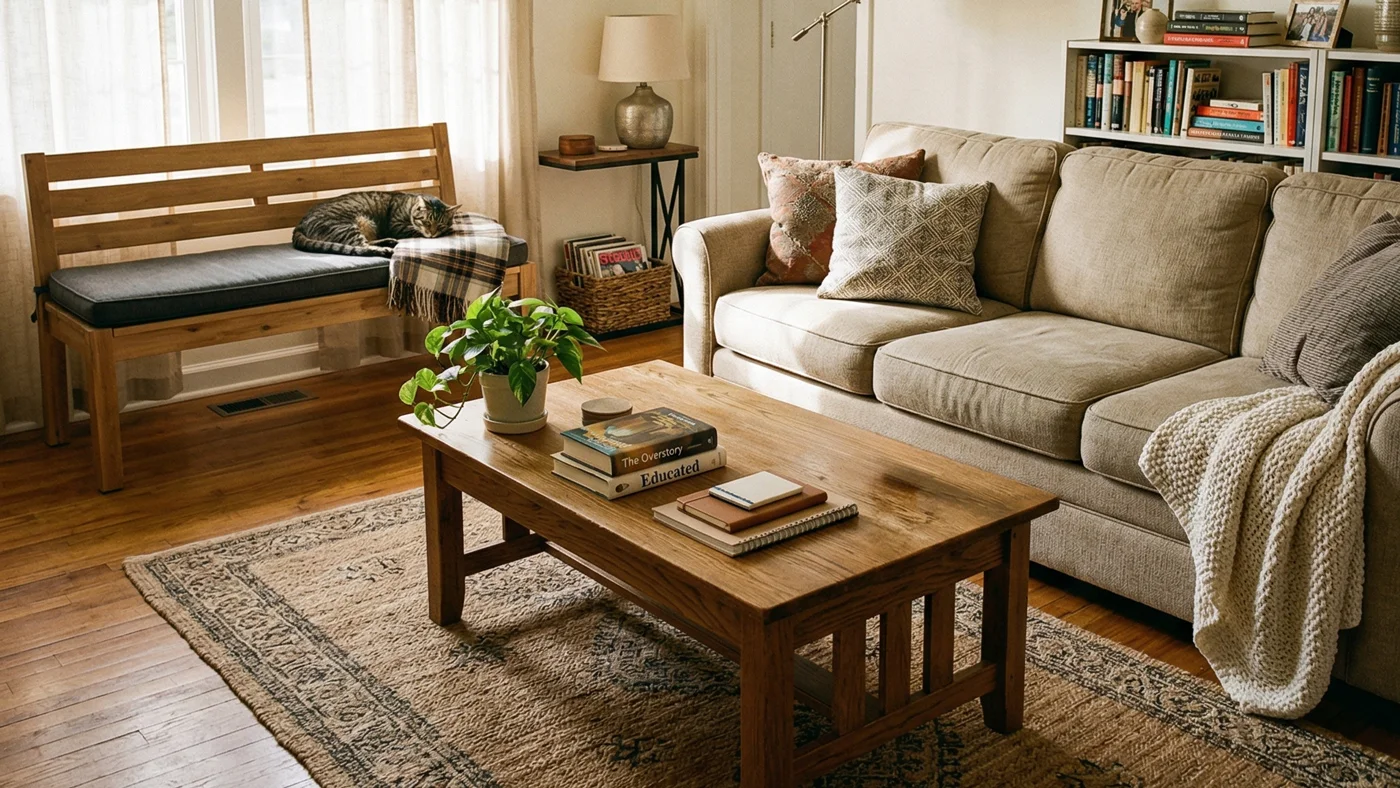
So you typed “couch cushion” into the search bar. Totally reasonable — it’s the first thing most people reach for when they realize the cushion situation in their home needs attention. But here’s a question worth sitting with for a moment (pun intended): are you sure it’s a couch cushion you’re after?
Because depending on what you’re actually trying to fix, a bench cushion might solve the problem better, faster, and with less frustration than replacing a sofa cushion. This isn’t a bait-and-switch — it’s genuinely useful information that most cushion searches never surface. Let’s sort through it.
First, Let’s Get the Terminology Straight
People use “couch cushion” to mean a few different things, which is part of why this gets confusing. Sometimes they mean the back pillows on a sofa. Sometimes they mean the seat cushions — the big ones you actually sit on. Sometimes they mean replacement cushion inserts for a sofa that’s lost its shape. And sometimes — more often than you’d think — they mean a cushion for a bench-style piece of furniture that they’re loosely calling a couch.
A couch cushion in the traditional sense is designed to work as part of a sofa system. It’s one of two or three seat cushions that divide up the sofa’s seating area, each one designed to fit within the sofa’s frame and work alongside the others. If one wears out or flattens, you typically need to replace it as a matched set — or at least find something close enough that it doesn’t look obviously mismatched.
A bench cushion is a single long cushion designed to run the full length of a seating surface — whether that’s a wooden bench, a built-in window seat, a dining bench, an entryway seat, or yes, even a bench-seat sofa (a sofa with one long cushion instead of multiple individual ones). It’s made to a specific length and depth, and because it’s one continuous piece, there are no gaps, no seams down the middle, no “which cushion goes where” decisions.
The question is: which one describes what you actually have, and what you actually need?

The Situations Where You Actually Need a Bench Cushion (Not a Couch Cushion)
Here’s where a lot of people realize they’ve been searching for the wrong thing. Run through these scenarios — if one of them sounds familiar, a bench cushion is almost certainly what you need.
You have a dining bench that needs cushioning. One of the most common bench cushion use cases in American homes, and one of the most frequently mislabeled. If your dining table has a bench along one side — whether it’s a free-standing bench you bought or a built-in banquette — you need a bench cushion, sized to the bench. A standard sofa cushion won’t fit, and individual chair cushions placed in a row look terrible and slide apart by the end of dinner.
Your entryway or mudroom bench is basically bare. The bench by the front door where everyone sits to put on shoes is one of the hardest-working spots in the house and almost always the least comfortable. It’s also almost never a couch. A bench cushion here — in a durable, easy-to-wipe fabric — is the practical upgrade that makes the space actually functional. It takes two minutes to measure and a week to arrive, and it transforms how the entry feels every single day.
You have a window seat that needs updating. Window seats are their own category of problem: they’re almost always non-standard in depth, they get direct sun which destroys inferior fabrics fast, and they’re the kind of surface that looks either great or awful depending almost entirely on the cushion. This is a bench cushion situation, full stop — usually a custom one, because window seat dimensions are all over the map.
Your “couch” is actually a bench-seat sofa. If your sofa has one single long seat cushion instead of two or three separate ones, you already own a bench-seat sofa. When that cushion wears out or flattens, you’re replacing a bench cushion — not a traditional sofa cushion. The terminology your furniture brand uses may vary, but functionally, that’s what it is.
You want to add seating somewhere without buying new furniture. A wooden bench — in a bedroom, on a porch, in a living room as an alternative to a coffee table — is vastly more comfortable with a cushion on it, and a custom bench cushion turns a basic piece of furniture into something that feels intentional. This is a much cheaper solution than a new sofa, and often a more flexible one.
Quick test: if what you’re sitting on is a single flat surface with no built-in divisions — whether it’s a dining bench, an entryway seat, a window nook, or a one-cushion sofa — you want a bench cushion. If it’s a sofa with separate individual cushions and you need to replace one of those, that’s a traditional sofa cushion situation.
Where Couch Cushions and Bench Cushions Actually Overlap
There’s one scenario where the two categories genuinely converge, and it’s worth naming: the bench-seat sofa. A lot of modern sofas — particularly cleaner-lined, more contemporary designs — use a single bench cushion as the seat instead of multiple individual cushions. IKEA does it. West Elm does it. A lot of custom sofa manufacturers offer it as an option because it looks sleeker and wears more evenly in some ways.
If you have this style of sofa and the seat cushion needs replacing, what you’re looking for is a bench cushion cut to the dimensions of your sofa seat. The challenge is that these aren’t always easy to source through the original manufacturer (especially for sofas that are a few years old), and standard retail bench cushions rarely match the exact dimensions of a specific sofa model. This is typically where a custom bench cushion, made to the precise measurements of your sofa seat, is the cleanest solution.
The custom bench cushion page is a good starting point for this — you specify the exact length, depth, and thickness, choose your fabric, and get something that fits your sofa rather than something you’re hoping will be close enough.

Why Bench Cushions Are Often the Better Choice for Shared Seating
Here’s something that doesn’t get said enough: for a lot of the situations where people think they want a couch, a bench actually works better. Not always — but more often than you’d expect.
A bench with a proper cushion is more flexible than a sofa. It doesn’t define how many people can sit on it the way a three-cushion sofa does. You can squeeze in one more person at a dinner table with a bench far more naturally than with individual chairs. You can use a bedroom bench as a seat, a surface, or an impromptu bed for a visiting kid without it being weird. A bench at the foot of a bed anchors the room visually and functions as a place to sit while putting on shoes — a sofa cannot do that.
Bench cushions also, generally speaking, wear more evenly than multi-cushion sofas. With a traditional sofa, most people have a preferred spot — the same cushion gets sat on more than the others, flattens faster, and eventually the sofa looks uneven even if the furniture itself is fine. A bench cushion distributes weight more naturally across the full surface because there’s no predetermined “your seat” structure built into it.
For outdoor seating especially, bench cushions are often the practical default. Most outdoor seating arrangements include some kind of bench — around a fire pit, along a deck railing, as part of a patio set — and those benches almost never come in standard cushion sizes. The custom outdoor bench cushion options are worth a look if you’re dealing with a patio situation, because this is exactly where standard retail sizing fails most often.

The Practical Part: How to Figure Out Which One You Need
If you’re still not sure which category applies to you, three questions will sort it out fast.
What is the surface? If it’s a sofa with multiple existing cushions and you need to replace one of them, that’s a sofa cushion situation and you need to find a match for what’s already there. If it’s a bench, a window seat, an entryway piece, or a one-cushion sofa — that’s a bench cushion, and the key variable is size.
What are the dimensions? For a bench cushion, you need three numbers: length (the long dimension, side to side), depth (front to back across the seat), and thickness. These three numbers are everything. If you don’t have them, measure before you do anything else — the measuring guide takes about five minutes and prevents the most common mistake in this whole process, which is ordering based on an estimate and being off by two inches.
Indoor or outdoor? This affects fabric choice significantly. Outdoor bench cushions need solution-dyed, UV-resistant fabric and foam that drains water rather than holding it. Indoor bench cushions have more options — texture, softness, and visual weight matter more than weather performance. The fabric guide breaks down what actually matters for each use case without requiring you to already know the terminology.

One More Thing Worth Saying
If you landed here looking for a replacement couch cushion because your sofa’s seat is flattened, shapeless, and generally sad — there is a version of that problem where a bench cushion genuinely is the answer. Bench-seat sofas are more common than most people realize, and if yours has one long seat cushion rather than multiple individual ones, that’s exactly what needs replacing. Same product category, just applied to a sofa instead of a standalone bench.
Either way, the path forward is the same: measure the actual seating surface, get the three numbers, and order something that fits it precisely rather than something you’re hoping will be close enough. The difference between a custom-sized bench cushion and a standard retail cushion that’s “roughly right” is the difference between a piece of furniture that looks finished and one that always looks slightly off.
Browse the full range of custom cushions — indoor, outdoor, bench, tufted, and more — or jump straight to the custom bench cushion page if you already know that’s what you’re dealing with. Bring your measurements. Three numbers, and you’re set.