
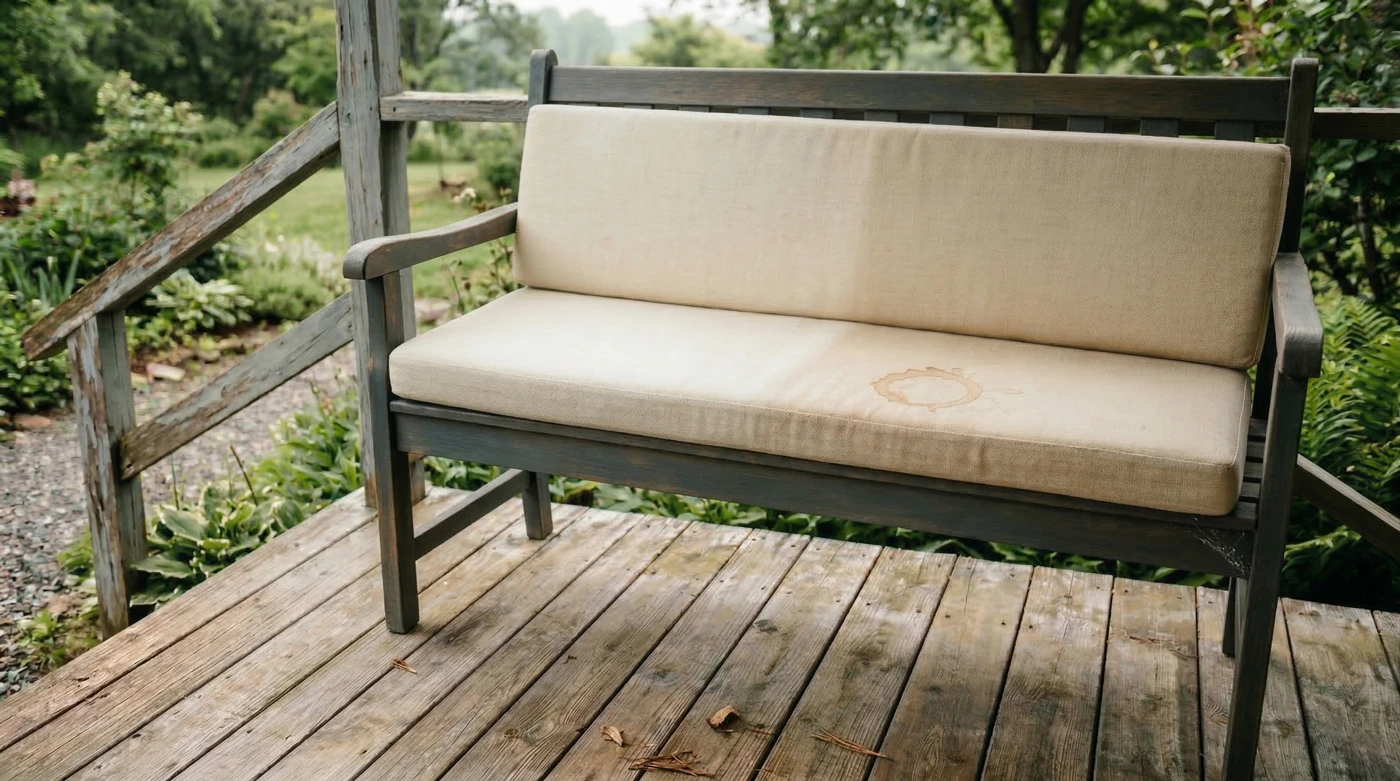
Spring Is Here — Time to Replace Your Cushions (For Real This Time)
There’s a moment every spring — you walk out onto the patio or past the bench by the window, and something just looks… off. The cushion that felt fine in October is now listing to one side. The color that was a warm sage green is now something closer to old newspaper. You tell yourself you’ll deal with it later. This is the article for the people who finally want to deal with it.
Why Spring Is Actually the Right Time (Not Just a Marketing Thing)
It genuinely makes sense to replace cushions in early spring rather than waiting for summer. After months of being stored improperly, left outside, or just sat on constantly through the holiday season and into the new year, cushion foam reaches a kind of point of no return. It compresses and doesn’t bounce back. If you press your palm into the cushion right now and the foam takes more than a few seconds to recover — that’s not cosmetic wear, that’s structural. You’re sitting on a surface that is actively working against your posture.
There’s also a practical rhythm to it. Interior designers have talked about spring as the season to swap out textiles — bedding, throw pillows, window treatments. HGTV’s spring refresh round-up consistently highlights how swapping soft furnishings (cushions, bedding, throws) creates one of the highest visual-impact changes for the lowest cost. A new bench cushion changes a room the same way a new rug does — it anchors everything else differently.

The Honest Signs Your Cushions Are Done
Most people know their cushions are past it long before they actually replace them. But there’s a difference between “the cushion looks rough” and “the cushion is legitimately no longer functional.” Here are the ones that actually matter:
The foam doesn’t spring back. Press in firmly with your fist and let go. If it takes 10 seconds or longer to return to its original shape, the foam core is structurally compromised. This isn’t fixable with a cover change — the fill is done.
There’s a persistent smell. Outdoor cushions especially trap moisture through repeated wet-dry cycles. Once mildew gets into the foam (not just the surface), no amount of cleaning actually removes it — you’re just addressing the surface. If it smells musty outside on a dry day, it’s the foam, not the fabric.
The color is gone on one side only. UV degradation is asymmetric — the side facing direct afternoon sun fades faster. When you see a noticeable color difference between the top face and the underside, that fabric is near the end of its useful life. It’ll continue to break down at the surface level and start to pill or tear more easily.
The shape has changed permanently. Bench cushions in particular develop a permanent indent in the center where people sit most. Once the foam has molded itself to a collapsed shape, it is that shape now — no amount of fluffing or rotating fixes it.
A good general rule: if your outdoor cushions were last replaced more than 3–4 seasons ago and spent at least one winter outside, you’re probably overdue. Quality solution-dyed fabrics and high-density foam can last 5–7 years, but that’s with proper care and storage — not most people’s actual situation.

What to Replace First: Indoor vs. Outdoor
If you’re not replacing everything at once (which is the sensible approach for most people), there’s a priority order that actually makes sense.
Outdoor cushions deteriorate faster and affect how you perceive your entire outdoor space. The patio or deck is the first thing you see when the weather breaks, and a worn-out bench cushion sets the whole tone. Starting with outdoor replacements gives you the highest visual return immediately — and since outdoor cushions face more abuse, the quality gap between a fresh cushion and a worn one is more dramatic.
Indoor pieces like dining bench cushions or window seat cushions can often wait a few weeks longer, but they come with a different kind of frustration: standard sizes almost never fit. If your bench is even half an inch off from a retail cushion size, you’re dealing with constant slippage or visible gaps. This is where the custom bench cushion argument actually has real weight — not as a luxury upgrade, but as a practical fix for a very common sizing problem.

The Part Nobody Wants to Admit About Store-Bought Cushions
Walk into any home goods store in March and there’ll be an entire section of spring cushions in coordinating colors, all priced to sell fast. Some of them are fine. But the honest limitation is this: retail cushions are made in a handful of standard sizes to fit a handful of standard benches. If your bench was built-in, inherited, oddly configured, or just not a standard width — you’re going to spend a lot of time finding something that “mostly fits.”
The foam density in mass-market cushions is also where corners get cut. You generally can’t tell from the tag whether a cushion uses 1.8 lb/ft³ foam or 2.5 lb/ft³ foam, but you’ll feel the difference within six months. The cheaper foam collapses noticeably faster — which is actually what makes that $30 cushion more expensive in the long run.
If you want to dig into the differences in fabric performance — which matters a lot for anything going outdoors — the fabric guide has a straightforward breakdown of what the different options actually hold up like over time.
How to Think About Color for Spring Without Getting It Wrong
Every spring the instinct is to go bright — sage green, dusty terracotta, warm butter yellow. That’s fine, and it’s popular for good reason. But a more durable approach (both visually and materially) is to anchor with a neutral and use the cushion’s texture or piping to add interest.
Solid, darker neutrals like charcoal, oat, or deep navy age better visually than most pastels — they don’t read as obviously “seasonal,” so you’re not tired of them by July. They also tend to use higher concentrations of dye in solution-dyed fabrics, which means they maintain vibrancy much longer under UV exposure than lighter colors do. That’s a real practical consideration, not just an aesthetic preference.
For the patio specifically, if you’re working with furniture that’s already a warm tone (teak, rattan, bronze hardware), leaning into greens and dusty blues creates a natural-looking contrast. If your furniture is black powder-coat or grey metal, almost anything works — that’s the easiest canvas to shop for.

The Measurement Part (Do This Before You Order Anything)
Whether you’re going custom or retail, measuring correctly saves you from the most common frustration in this process. For a bench cushion, you need three numbers: length, width (depth front to back), and thickness. A lot of people skip the thickness measurement, then end up with a cushion that looks too thin for the bench aesthetically, or is taller than the armrest clearance they have.
If the bench has any taper, notch, or irregular corner — measure at the widest and narrowest points and note both. For a custom order, those numbers actually get used. For retail, you’re picking the closest standard size and accepting some compromise. The measuring guide walks through this in more detail including how to handle corners and angled backs.
For window seats specifically — which are one of the most commonly mismeasured surfaces — the depth often varies from one end to the other because of how trim is installed. Measuring in the middle isn’t accurate enough. Measure at three points along the depth and use the smallest number as your baseline.

Outdoor Bench Cushions Deserve Specific Attention
Outdoor bench cushions are one of those categories where the difference between a good one and a cheap one becomes apparent quickly and annoyingly. The main issues with lower-quality outdoor bench cushions: they don’t dry properly (water pools in the seam area and promotes mildew from the inside), the fabric fades unevenly, and the ties loosen after a season of UV exposure.
What to look for: solution-dyed acrylic fabric (not polyester that’s been surface-treated), double-stitched or piped seams, and foam with some kind of open-cell structure that allows water to drain rather than hold. If those specs aren’t listed clearly, that’s information too.
The custom outdoor bench cushions are worth considering here specifically because the size problem is worse outdoors — patio benches come in every conceivable width and standard sizes leave large gaps. Beyond aesthetics, a cushion that doesn’t fully cover the bench surface wears unevenly and looks sloppy fast.
Quick reference: what to check before ordering
| Measurement | Length × Width × Thickness — measure depth at 3 points |
| Foam | 2.0–2.5 lb/ft³ for daily use; lower for occasional seating |
| Fabric (outdoor) | Solution-dyed acrylic; check for UV resistance and water drainage |
| Seam type | Piped or double-stitched holds up significantly better outdoors |
One More Thing About Custom vs. Off-the-Shelf
This isn’t a question with one right answer — it genuinely depends on your bench. If you have a fairly standard 48″ or 60″ dining bench, you can probably find a good retail option and be satisfied with it. If you have a built-in window seat, an inherited piece with unusual proportions, or an outdoor bench at a non-standard width — retail shopping becomes a frustrating exercise in finding the least-bad compromise. That’s when custom actually makes sense, not as an indulgence, but as the only way to get something that actually fits and therefore looks right.
The lead time on a custom order is real — typically 1–2 weeks — but for something you’re going to sit on daily for the next several years, that’s not a significant wait. If you’re starting to look at this in March or April, you’re actually in good timing to have something ready well before the outdoor season is in full swing.
Browse the full range of custom cushion options — including indoor and outdoor styles — or jump straight to the specific product pages if you already know what you’re looking for. For anything with an unusual shape or size, the product pages include sizing notes and there’s measurement support available.